Understanding Kava Plant Anatomy for Quality
The kava plant (Piper methysticum) is a fascinating botanical, with different parts containing varying concentrations of its active compounds, kavalactones. For centuries, Pacific Islanders have understood which parts of the plant are suitable for traditional consumption. This traditional knowledge forms the bedrock of modern quality standards, ensuring that only specific, safe, and effective plant material makes it into kava products.
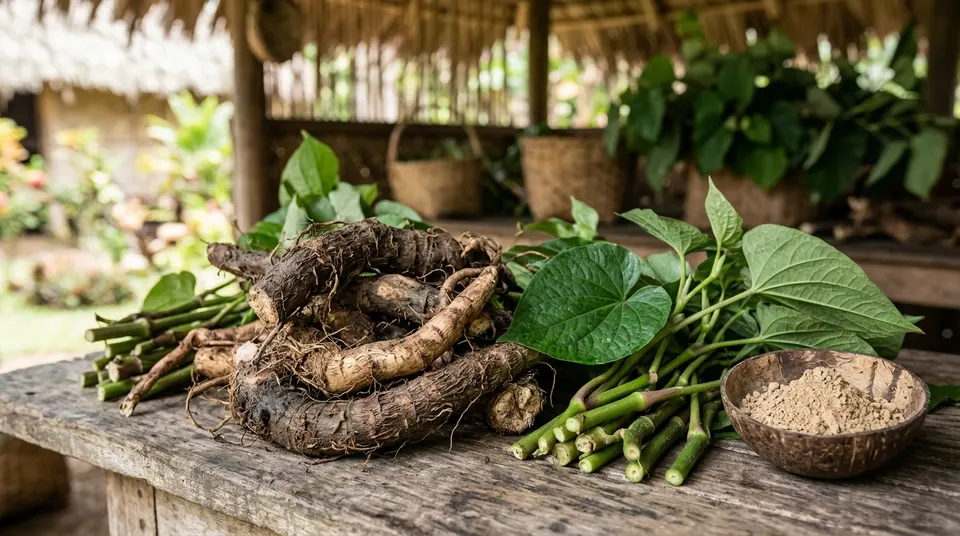
When discussing kava quality, it's essential to distinguish between the various parts of the plant. The primary components used for kava preparation are the roots and the basal stem. These parts are rich in kavalactones, which are responsible for kava's characteristic effects. Other parts of the plant, such as the leaves and upper stems, are traditionally excluded from consumption due to their different chemical profiles and potential for undesirable effects.
The concentration of kavalactones varies significantly across the plant. Lateral roots, which are the smaller, fibrous roots extending from the main rhizome, typically contain the highest concentration of kavalactones. The rhizome, or basal stump, which is the thick, woody underground stem, also contains a substantial amount. The basal stem, specifically up to its first node, is also considered acceptable for use. In contrast, the aerial parts of the plant, including leaves and stems above the first node, contain significantly lower kavalactone content and are generally not used in quality kava products.
Defining Noble Kava and Excluded Plant Material
The concept of 'noble kava' is central to kava quality standards. Noble kava refers to specific cultivars of Piper methysticum that have a long history of safe traditional use and a favorable kavalactone profile. These varieties are distinguished from 'tudei' (two-day) kava and wild kava, which are generally excluded from quality products due to their different chemical compositions and traditional associations with less desirable effects.
International and regional standards have been developed to codify these traditional practices. For instance, a regional standard for kava products adopted for North America and the South West Pacific explicitly outlines the acceptable plant parts. This standard permits the use of peeled rhizome, the base of the stem up to its first node, and the roots. Crucially, it prohibits the inclusion of upper stems, leaves, peelings, and bark. Furthermore, only noble varieties qualify under this standard, with wild kava and tudei varieties specifically named as excluded.
The exclusion of certain plant parts is not arbitrary. It is based on centuries of traditional use and an understanding of the plant's chemistry. For example, the peelings and bark, while part of the root system, are often removed during preparation to ensure a smoother product and to avoid certain compounds that may be present in these outer layers. The focus remains on the core root and basal stem material, which consistently delivers the desired kavalactone profile.
Kavalactone Content and Plant Age
Beyond the specific plant part, the age of the kava plant also influences its kavalactone content. As kava plants mature, the concentration of kavalactones in their roots tends to increase. This is why experienced kava farmers often cultivate plants for several years before harvesting, ensuring a potent and high-quality product. Kavalactone content can range from approximately 3% to 20% of the dry weight, depending on both the cultivar and the plant's age.
The distribution of kavalactones within the root system is also important. As mentioned, lateral roots generally contain the highest concentration, followed by the rhizome, and then the stems. This understanding guides harvesting and processing practices, with a focus on maximizing the yield of kavalactone-rich material. Suppliers committed to quality will prioritize these parts, ensuring that their products meet established potency expectations.
For consumers, understanding these nuances can help in evaluating product claims. A reputable kava supplier will often specify the plant parts used in their products, reinforcing their commitment to quality and adherence to traditional practices. Transparency in sourcing and processing is a hallmark of high-quality kava.
Authoritative Quality Codes and Labeling
The standardization of kava quality extends to chemical profiling. Teschke and Lebot proposed a chemical quality code for kava, which has become an authoritative reference. This code is based on listing the identification number of each major kavalactone in decreasing order of quantity. This chemotype system provides a precise way to characterize different kava cultivars and ensures consistency in product quality.
For example, a chemotype like '462351' indicates the relative abundance of specific kavalactones, with the first number representing the most abundant kavalactone, and so on. This detailed chemical fingerprint allows for the identification of noble kava varieties and helps to differentiate them from non-noble or tudei types, which may have different kavalactone profiles.
Beyond chemical profiling, labeling standards are also crucial for consumer information and product integrity. The regional standard for kava products mandates that labels must clearly state the part of the plant used and the country of origin. This transparency allows consumers to make informed choices and ensures accountability within the kava industry. The absence of additives is also a key requirement, ensuring that consumers receive pure kava products without extraneous ingredients.
When selecting kava, looking for products that adhere to these quality standards is paramount. Reputable kava bars and suppliers will be transparent about their sourcing, the plant parts used, and their adherence to established quality codes. This commitment to quality not only honors the traditional uses of kava but also ensures a consistent and authentic experience for consumers.
In conclusion, the quality of kava is intricately linked to the specific plant parts utilized and adherence to rigorous standards. By focusing on noble varieties, prioritizing lateral roots, rhizome, and basal stem, and following established chemical and labeling codes, the kava industry can continue to provide high-quality products that respect traditional practices and meet consumer expectations.
Sources & further reading
- Kava - Wikipediaen.wikipedia.org
- Kava Glossary — Key Terms & Definitions | Kavainkavain.com
- Kava Root: What It Is and Which Part Matterssundayscaries.com
- Our Kava Quality Standards | Root of Happinessrootofhappinesskava.com
- Kratom vs Kava: The Leaf, the Root and the Labelwholeearthgifts.com
- Bioactive Compound Profile and Nutrition Values of Kava (Piper methysticum) Cultivated in Fijidoi.org