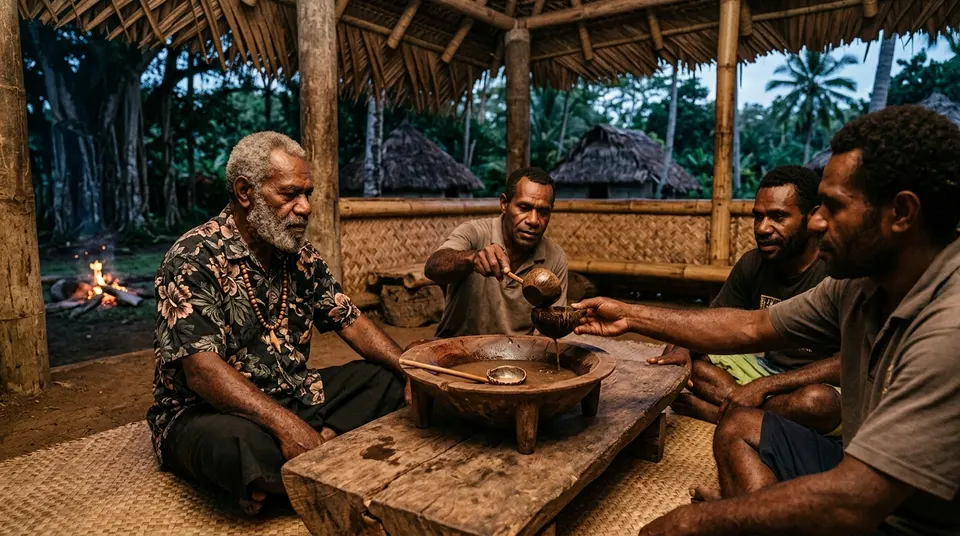
The Nakamal: A Cornerstone of Vanuatu Society
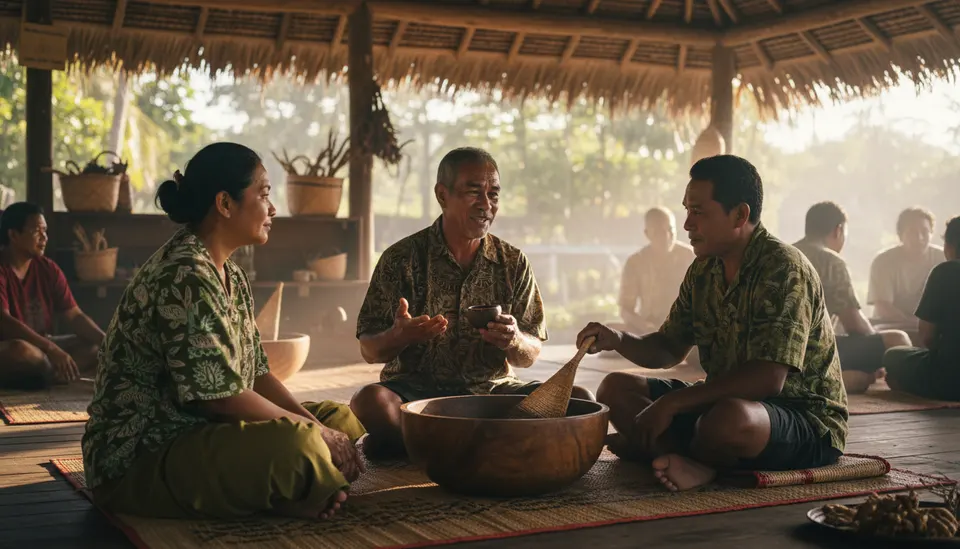
In Vanuatu, the nakamal stands as a central pillar of village life, a place where community, tradition, and spirituality converge. Far more than just a structure, the nakamal embodies the social and cultural fabric of Ni-Vanuatu society, particularly for men. Historically, these communal hubs were constructed under the guidance of local chiefs, serving as critical venues for governance, the resolution of disputes, and the integration of indigenous customs. Kava rituals, central to these gatherings, symbolized reconciliation, connections to ancestors, and the principle of male equality through shared consumption. The nakamal thus reinforced chiefly authority while providing essential spaces for significant life-cycle events, strengthening social and spiritual bonds within communities.
The enduring importance of the nakamal is evident in its continued role across many islands, where men gather nightly to drink kava and engage with the spirits of their ancestors, whose bones are often interred nearby. Through specific practices, they seek to connect with and influence the spiritual realm, which is perceived as omnipresent. This deep connection to kastom (custom) persists among the vast majority of rural inhabitants, guiding daily life alongside Christian beliefs.
Traditional Functions and Social Dynamics
The nakamal's functions extend beyond kava consumption. It is the primary forum for discussing village affairs and making important decisions that affect the entire community. This central gathering spot underscores the patriarchal nature of Ni-Vanuatu society, where men traditionally hold significant authority over land distribution, formal decision-making processes, and village politics. However, it is important to note that daily life in Vanuatu relies on shared work, with both men and women contributing to gardening, fishing, family life, and community obligations. While women play crucial roles in education, church life, markets, and the broader economy, their representation in higher-level governance traditionally remains lower compared to men.
The architecture of the nakamal itself often reflects its spiritual significance. Large banyan trees, widely associated with the presence of spirits in parts of Melanesia, commonly stand at nakamals. These trees strengthen the social and spiritual associations of the ceremonial meeting place, further embedding the nakamal within the spiritual landscape of the village.
Kava Rituals at the Heart of Nakamal Gatherings
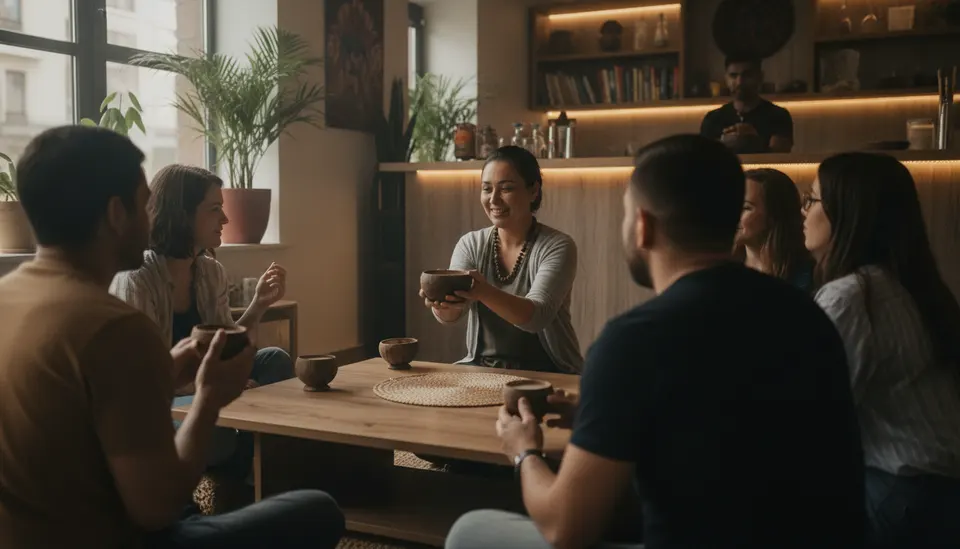
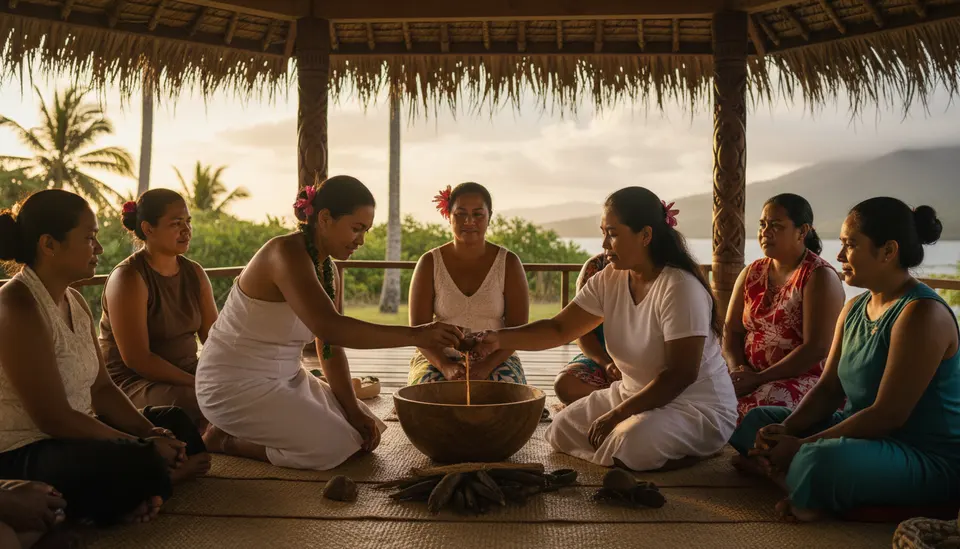
Kava drinking forms the core ritual of nakamal gatherings. This traditional beverage, prepared from the root of the kava plant, is consumed according to specific customs that honor its profound cultural significance. The preparation and sharing of kava are not merely acts of consumption; they are integral parts of a larger ceremonial process that reinforces social structures, facilitates communication, and connects individuals to their heritage.
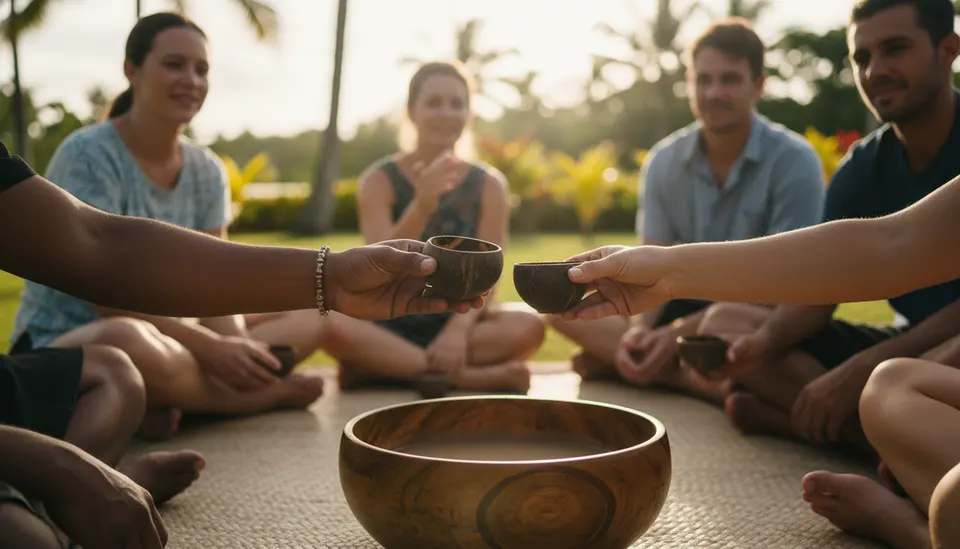
The shared act of drinking kava within the nakamal fosters a sense of community and equality among participants. It is a moment for reflection, discussion, and the strengthening of communal ties. The specific customs surrounding kava preparation and consumption vary across different islands and villages, but the underlying principles of respect, tradition, and social cohesion remain constant.
Evolution and External Influences
While the fundamental role of the nakamal has endured, its physical construction has seen changes over time, particularly following European contact. From the late 18th century onwards, and more formally with Anglo-French colonialism in 1906, external influences began to impact nakamal construction. The introduction of imported materials, such as corrugated iron for roofing and sawn timber, gradually replaced traditional thatch and woven elements. These changes were often driven by practical considerations, such as the desire for greater durability against introduced diseases and the economic pressures of a changing world.
Despite these material alterations, the spirit and function of the nakamal persist. It remains an essential gathering spot, a place where the traditions of Vanuatu are upheld, decisions are made, and the community finds its center. The blend of ancient customs with modern adaptations highlights the resilience of Ni-Vanuatu culture and the enduring importance of the nakamal as a cultural and social institution.
Understanding the nakamal is crucial for anyone seeking to appreciate the depth of kava culture and the rich traditions of Vanuatu. It is a living testament to a society deeply rooted in its customs, where communal spaces facilitate not only social interaction but also spiritual connection and the perpetuation of ancestral knowledge.
The Role of Chiefs and Community Governance
Chiefs play a pivotal role in the governance facilitated by the nakamal. Their direction in the construction and maintenance of these communal spaces underscores their authority and responsibility within the village. Decisions made within the nakamal often involve complex discussions and negotiations, reflecting the nuanced social hierarchies and communal consensus-building processes inherent in Ni-Vanuatu society. The presence of chiefs ensures that discussions are guided by established customs and that resolutions align with the community's values and traditions.
Spiritual Connections and Ancestral Reverence
The spiritual dimension of the nakamal is profound. The belief in an all-pervasive spiritual realm and the practice of communicating with ancestral spirits are deeply ingrained. The proximity of ancestral burial sites to nakamals on many islands reinforces this connection, making the nakamal a sacred space where the past and present converge. Through kava rituals and other customary practices, men seek to honor their ancestors and draw upon their wisdom, ensuring the continuity of cultural heritage.
Modern Context and Enduring Significance
In the contemporary landscape of Vanuatu, the nakamal continues to be a vibrant and active institution. While modern influences are undeniable, the core values and functions remain largely intact. The nakamal serves as a vital link to the past, a place where traditional knowledge is transmitted across generations, and where the unique identity of Ni-Vanuatu culture is preserved and celebrated. Its enduring significance highlights the power of communal spaces to maintain cultural integrity in an ever-changing world.
Sources & further reading
- Nakamal — Grokipediagrokipedia.com
- Vanuatu - Melanesian, Customary, Tribal | Britannicabritannica.com
- Vanuatu Culture: Traditions and Customs of Vanuatu - Culturescultures.fr
- A Traveller's Guide to the Ni-Vanuatu Culture | Vanuatu Pocket Guidevanuatupocketguide.com
- 🇻🇺 Ni-Vanuatu Superstitions — 329+ Oral-Tradition Records · Rank #87 in Source-Backed Datasetsuperstitionsmap.com
- Vanuatu Nakamal – Vanuatu Independentvanuatuindependent.com