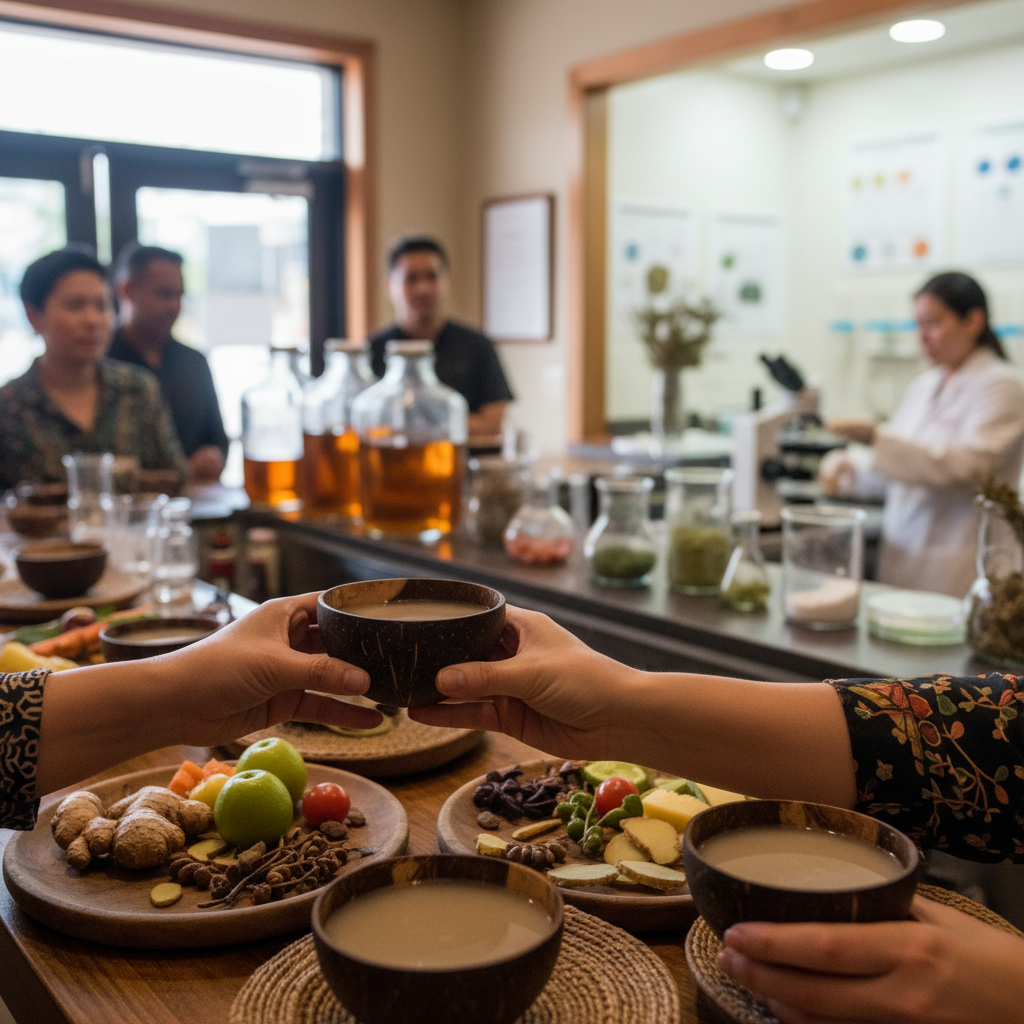
Kava Bars Innovate with Tasting Experiences
In the ever-evolving world of kava culture, kava bars across the United States are stepping up their game by introducing curated tasting experiences that aim to educate and delight patrons. Much like wine or craft beer tastings, these events are designed to deepen customers' appreciation for kava, a traditional Pacific Island beverage known for its calming effects. From Honolulu to Miami, kava bars are transforming into hubs of cultural exchange, offering a modern twist on an ancient drink.
At places like 'Kava Konnection' in Asheville, North Carolina, owners are hosting monthly tasting nights where guests sample different kava strains sourced directly from Fiji, Vanuatu, and Tonga. Each strain offers unique flavors and effects, ranging from earthy and peppery to mildly bitter, often paired with educational talks about kava's history and preparation methods. These events are not just about sipping a relaxing brew; they’re about connecting with the roots of kava culture and understanding the meticulous process behind each shell of kava.
“We want people to experience kava the way it’s been enjoyed for centuries, but with a contemporary spin,” says Mia Leilani, co-owner of Kava Konnection. “Our tasting events include storytelling sessions about kava’s role in Pacific Island ceremonies, alongside guided tastings that highlight the nuances of each variety. It’s about building a community around this sacred plant.”
Beyond education, these tasting experiences are also driving business. Many kava bars report a 20-30% increase in foot traffic on event nights, as curious newcomers and seasoned kava enthusiasts alike flock to learn more. Some bars are even partnering with local chefs to create kava-infused mocktails or small bites, further enhancing the sensory experience. This innovative approach is helping kava bars stand out in competitive social scenes, offering an alcohol-free alternative that prioritizes relaxation and connection.
Kratom Industry Shifts Focus to Research and Safety Standards
While kava bars are redefining social spaces, the kratom industry is making headlines with its renewed emphasis on research and safety. Kratom, a Southeast Asian herb related to the coffee plant, has gained popularity in recent years for its potential to support energy, focus, and pain relief. However, its rapid rise has also brought scrutiny, prompting industry leaders to advocate for rigorous testing and transparent practices.
In early 2026, several prominent kratom vendors announced partnerships with independent laboratories to conduct detailed analyses of their products. These efforts aim to ensure consistency in alkaloid content—primarily mitragynine and 7-hydroxymitragynine, the active compounds in kratom—and to screen for contaminants. The American Kratom Association (AKA), a leading advocacy group, has been instrumental in pushing for these standards, working to establish a framework for Good Manufacturing Practices (GMP) certification across the industry.
“Consumers deserve to know exactly what they’re getting,” says David Herman, a spokesperson for the AKA. “By prioritizing third-party testing and clear labeling, we’re building trust and ensuring that kratom remains a safe, viable option for those who rely on it. Research is the backbone of this mission.”
Alongside safety initiatives, the kratom industry is also investing in scientific studies to better understand the herb’s effects. Universities in the U.S. and Southeast Asia are collaborating on research projects examining kratom’s potential benefits and risks. Preliminary findings suggest that when used responsibly, kratom may offer support for managing stress and discomfort, though experts caution that more long-term data is needed. These studies are a critical step toward legitimizing kratom in the eyes of regulators and the public, as the industry seeks to distance itself from past controversies.
Latest Kava Health Benefits Study Sparks Interest
Adding to the excitement in the kava community, a recent study published in early 2026 by a team of researchers from the University of Hawaii has shed new light on kava’s potential health benefits. The study, which reviewed over a decade of data on kava consumption, reaffirmed its traditional use as a natural relaxant, with findings indicating that kava’s active compounds, called kavalactones, may help reduce anxiety and promote better sleep without the risk of dependency associated with some pharmaceutical alternatives.
The researchers also noted that moderate kava use appears to have minimal adverse effects on the liver when consumed in its traditional form—contrary to earlier concerns that led to bans in some countries. However, they emphasized the importance of sourcing high-quality, noble kava varieties, as opposed to less reputable strains that may pose risks.
“This study is a game-changer for kava’s reputation,” says Dr. Elena Kavau, lead author of the research. “We’re seeing evidence that kava, when prepared and consumed properly, can be a safe and effective tool for stress management. It’s a call to action for both consumers and the industry to prioritize quality and education.”
For kava bars and vendors, this study is a boon, providing scientific backing to their claims about kava’s calming properties. Many are already leveraging the findings in marketing campaigns, with social media buzzing about kava as a “natural chill pill.” However, the study also underscores the need for regulation to ensure that only high-grade kava reaches consumers—a challenge that parallels the kratom industry’s current struggles.
What’s Next for Kava and Kratom?
As kava bars continue to innovate with unique tasting experiences, they’re not only preserving a centuries-old tradition but also adapting it for modern audiences. Meanwhile, the kratom industry’s focus on research and safety reflects a maturing market determined to prove its worth. Together, these developments highlight the dynamic nature of the kava and kratom sectors, where cultural heritage meets contemporary demands.
Whether you’re a longtime fan or a curious newcomer, there’s never been a better time to explore the world of kava and kratom. Stop by a local kava bar for a tasting event, or dive into the latest kratom research to make informed choices. Both industries are poised for growth, driven by a shared commitment to community, quality, and transparency.