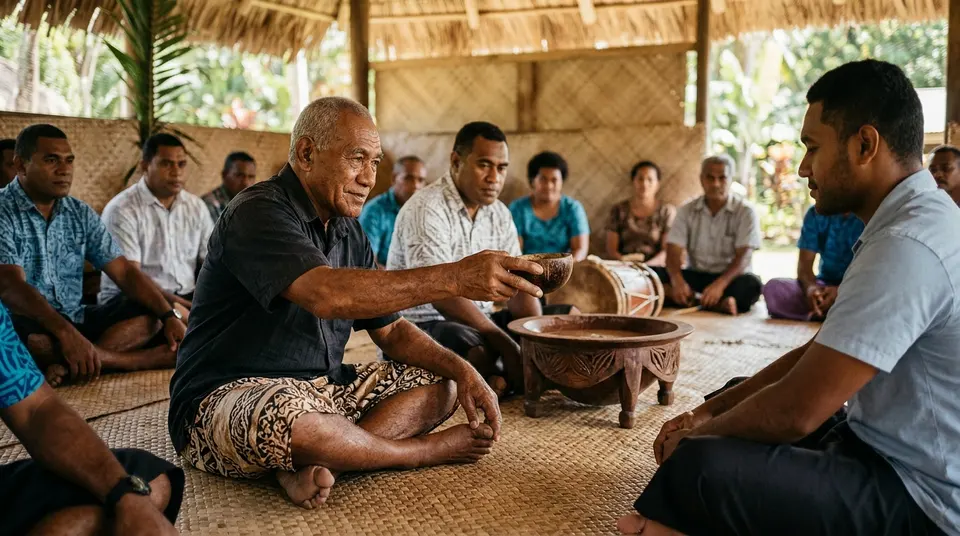
Understanding the Fijian Yaqona Ceremony
The Fijian yaqona ceremony, often referred to simply as a kava ceremony, is a cornerstone of iTaukei (indigenous Fijian) culture. It is far more than a casual gathering; it is a deeply rooted ritual that underscores social bonds, establishes relationships, and reflects the vanua system of land-based social organization. Participation in a yaqona ceremony requires an understanding of its specific etiquette and the various roles within the community that contribute to its proper execution.
Central to initiating interactions and seeking permission, particularly when entering communal spaces, is the sevusevu. This ceremonial offering involves the presentation of a bundle of yaqona roots by a spokesperson from the visiting party to the host chief. This exchange typically occurs in the village meeting house, known as a bure or vale ni bose, and serves as a formal establishment of relationships between hosts and guests.
The Sevusevu: Initiating the Ritual
The sevusevu is the foundational act of a Fijian yaqona ceremony, signifying respect and a formal request for welcome. Without this initial offering, other interactions may not proceed according to tradition. The presentation itself is a carefully choreographed act:
- The spokesperson for the visiting party, often accompanied by others, approaches the host chief.
- A bundle of yaqona roots is presented.
- During this presentation, the individual offering the yaqona typically remains below eye level as a sign of respect, placing the bundle in front of the chief.
Following the physical offering, a traditional monologue is recited by the chief, often in the Fijian language, which is then typically followed by three claps, known as cobos. This sequence confirms the acceptance of the sevusevu and signals the commencement of the ceremonial proceedings.
Roles and Responsibilities within the Ceremony
Each participant in a Fijian yaqona ceremony holds a specific role, contributing to the flow and spiritual integrity of the event. These roles are not merely performative; they are integral to the ceremony's meaning and effectiveness.
The Chief (Turaga ni Koro)
The chief, or Turaga ni Koro, is the central figure in the ceremony. They receive the sevusevu and preside over the gathering. Historically, the chief's reception of yaqona was understood within a sacred context, confirming their divine legitimacy and acting as a transaction with spiritual force. Today, while the spiritual invocation of figures like Ratu-mai-Bulu (Lord of the Land of the Dead) in chiefly yaqona ceremonies may be less overt in casual settings, the underlying respect for the chief's role as a spiritual and community leader remains.
The Spokesperson
The spokesperson, particularly for a visiting party, is responsible for the formal presentation of the yaqona during the sevusevu. This individual articulates the purpose of the visit and offers the kava roots on behalf of their group, adhering to strict protocols of respect and humility.
The Preparer
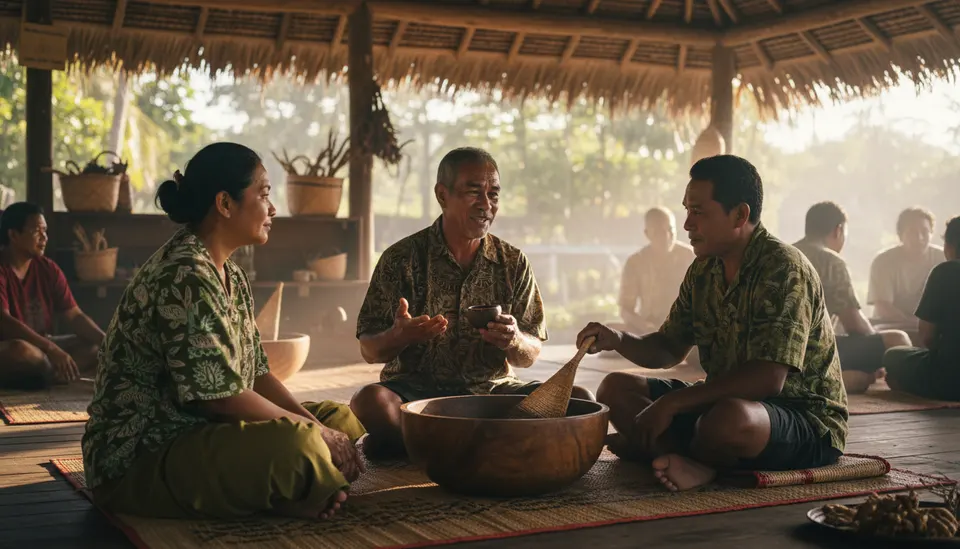
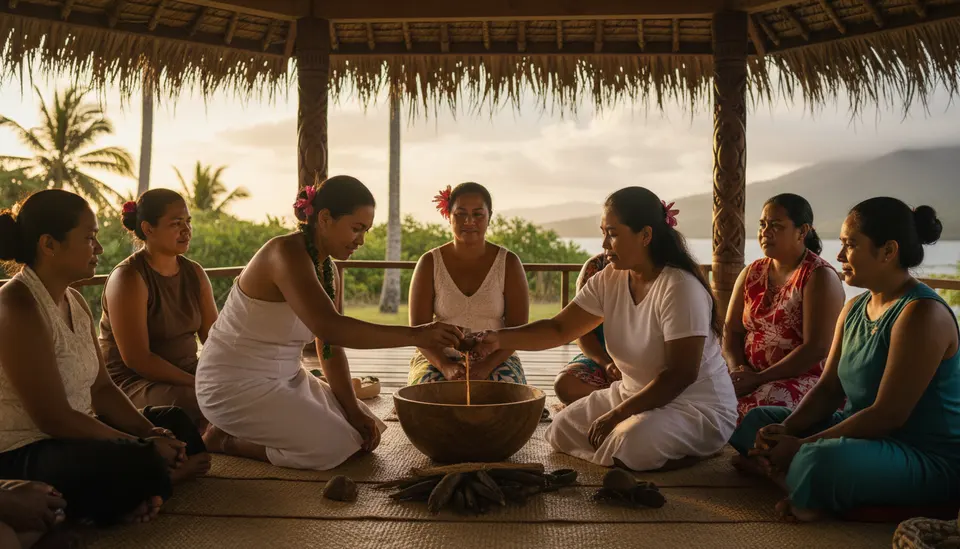
The preparer, often seated near the chief, is responsible for mixing the yaqona. This involves grinding or pounding the dried roots, placing them into a cloth filter, and then kneading them in a large wooden bowl called a tanoa with water. The preparer ensures the kava is properly strained and ready for serving. The quality of the preparation is crucial, as it reflects on the hospitality of the hosts.
The Server (Dau ni Yaqona)
The server, or Dau ni Yaqona, is tasked with distributing the prepared yaqona to each participant. They move with purpose and respect, ensuring that each person receives their share in the correct order. The server's movements and presentation of the cup are part of the overall ceremonial etiquette.
The Participants
All participants, whether hosts or guests, play a role by observing the established etiquette. This includes maintaining appropriate posture, showing respect to the chief and elders, and following the instructions of the host or local guide. The act of receiving yaqona is an act of hospitality, a spiritual welcome, and a confirmation of social bonds.
Ceremonial Etiquette and Protocols
Adherence to specific etiquette is paramount in a Fijian yaqona ceremony. These protocols are not arbitrary; they are deeply ingrained cultural expressions of respect, humility, and community cohesion.
- Dress Code: Modest attire is expected. For women, this typically means covering shoulders and knees. Hats are generally removed as a sign of respect, especially within a bure or in the presence of a chief.
- Seating Arrangement: Participants are usually seated on mats on the floor. It is customary to sit cross-legged or with legs tucked to the side, avoiding pointing one's feet directly at others, particularly the chief.
- Presentation of Yaqona: As mentioned, the sevusevu involves the formal presentation of yaqona roots. The individual presenting should remain below eye level to the chief.
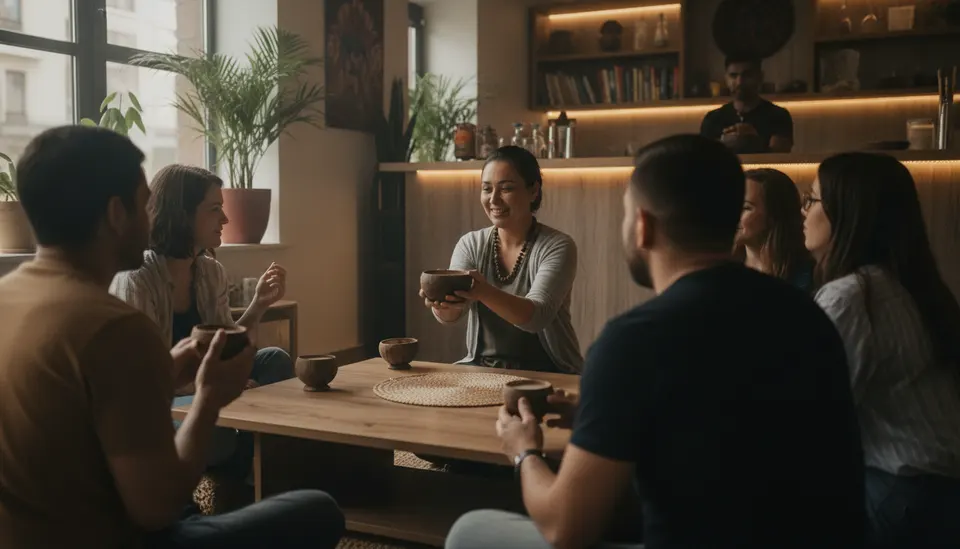
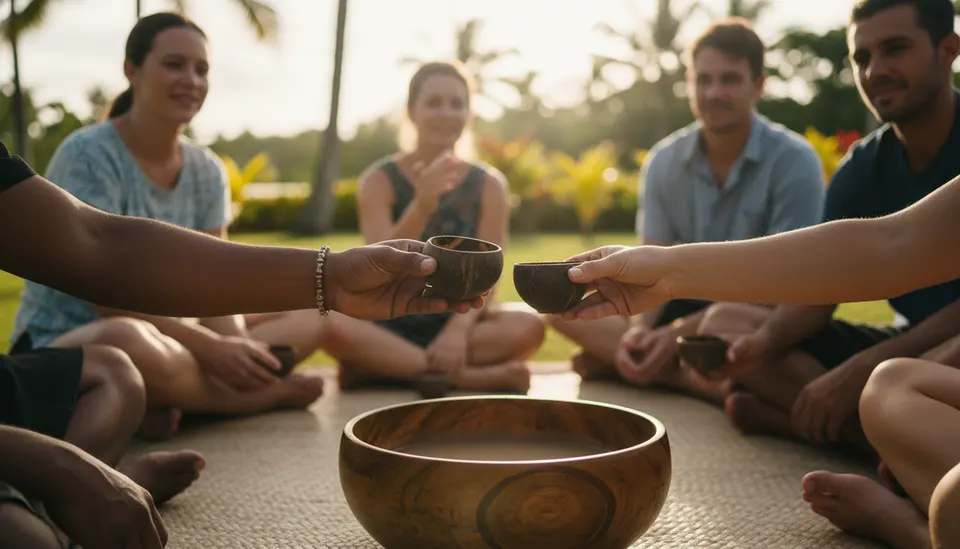
- Receiving the Yaqona: When the server approaches with the cup (often a half coconut shell, known as a bilo), it is customary to clap once (cobo) before accepting the cup.
- Drinking the Yaqona: The yaqona should be consumed in one go, if possible. After drinking, it is traditional to clap three times (cobo) and say "Bula!" (meaning "health" or "life").
- Silence and Respect: During the formal parts of the ceremony, particularly when the chief is speaking or the yaqona is being prepared and served, silence and respectful attention are maintained. Loud talking or disruptive behavior is considered inappropriate.
- Movement: When moving around the ceremonial space, especially in front of the chief, it is customary to stoop slightly as a sign of deference.
It is important to note that while general guidelines exist, specific etiquette can vary from province to province within Fiji. Therefore, the guidance of a local host or guide is invaluable for navigating the nuances of a particular ceremony.
The Spiritual and Social Dimensions
Beyond the observable actions, the yaqona ceremony holds profound spiritual and social significance. It is a powerful demonstration of the communal spirit and cultural continuity of Fijian society. The shared act of preparing and consuming yaqona reinforces social bonds and fosters a sense of belonging.
Historically, the ritual structure of presentation, mixing, serving, and reception was understood as a transaction with spiritual force. While modern yaqona consumption is ubiquitous in Fijian life, ranging from casual gatherings to formal occasions, the underlying respect for its traditional roots and its role in establishing and maintaining community harmony persists. It remains a standard greeting ceremony offered to visitors, symbolizing a warm welcome and an invitation into the fabric of Fijian life.
The yaqona ceremony is a living tradition, adapting to contemporary contexts while retaining its core values. Engaging with it respectfully provides a unique insight into the heart of Fijian culture, emphasizing reciprocity, social cohesion, and the enduring connection to the land and ancestral practices.
Sources & further reading
- Fijian traditions and ceremonies - Wikipediaen.wikipedia.org
- Fijian traditions and ceremonies — Grokipediagrokipedia.com
- Experience a Kava Ceremony: Connect with Fiji’s Ancient Traditions - Fijiecofijieco.com
- Fijian Religion — The Way of the Vanua · Tianmu Anglican Churchtianmu.org
- Cultural Etiquette in Fiji: What Tourists Should Knowfarandawayadventures.com
- Fiji Village And Kava Etiquette: A Cultural Guide | FJfijijournal.com